
digiPunchCard
Digital Punch CardBusiness
3.423.00 Reviews
- Version
- 3.0.0.71
- Installs
- 10.00K
- Age Rating
- Everyone
Screenshots
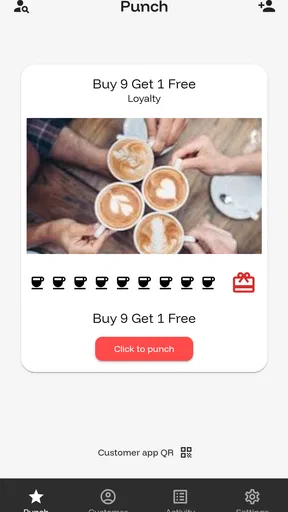
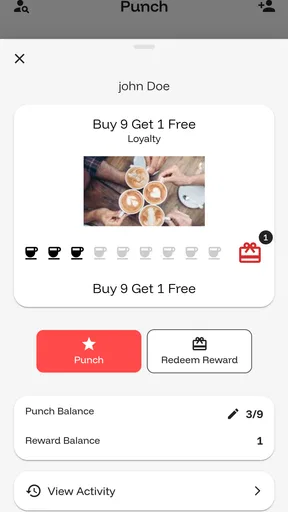
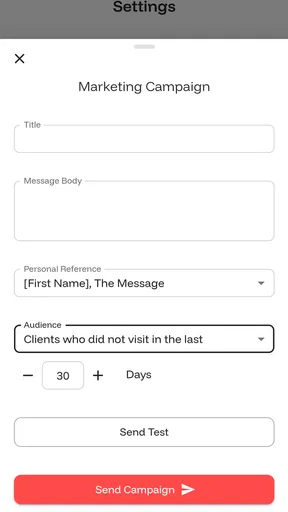
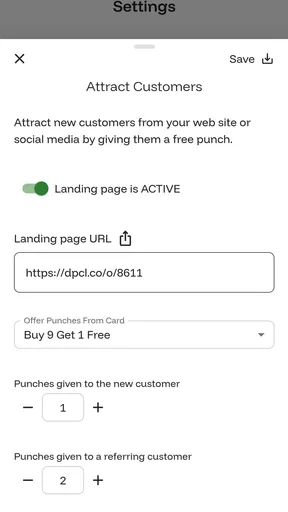
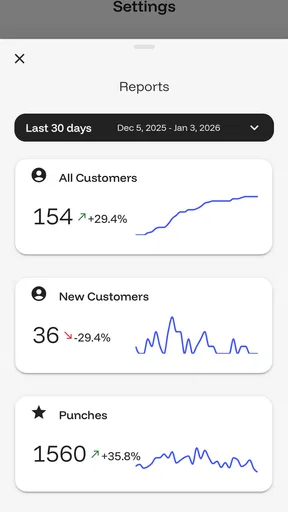
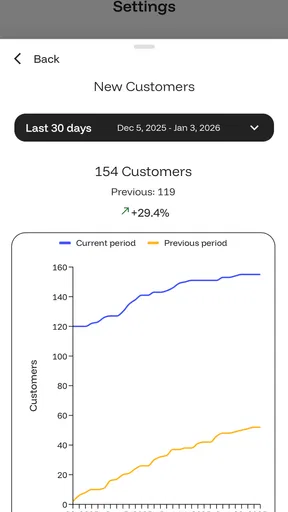
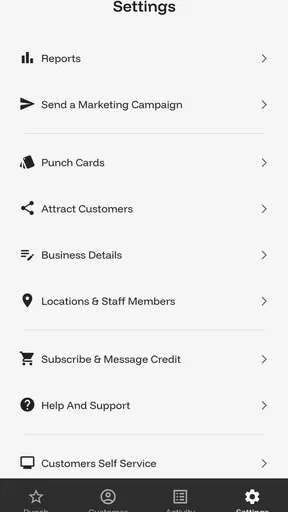
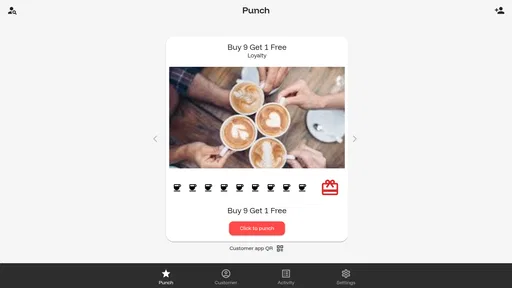
Our Review of digiPunchCard
 Analysis by Appyee
Running a small loyalty scheme sounds simple until the practical details start piling up. A paper card gets lost, a phone number may be written down incorrectly, and staff members can end up explaining different rules to different customers. I looked at digiPunchCard as a business tool for replacing that familiar paper routine with a digital punch-card approach. My overall impression is that it is most interesting for a small shop or service business that wants a straightforward loyalty system without beginning with a much larger customer-management platform.
The app sits in the Business category and is developed by Digital Punch Card. It is free to install, rated for Everyone, and currently sits at version 3.0.0.71 with Android 8.0 or later required. Its average rating is 3.4 from around 57 ratings, while its install count has passed 10K. Those figures suggest a modest, established audience rather than a dominant retail platform, so I approached it as a focused tool rather than an all-in-one business suite.
From a customer visit to a completed loyalty cycle
I find it useful to judge a loyalty tool by the whole visit, not just by whether a punch can be recorded. In this section, I’ll follow the customer’s path from arriving at the counter through earning and eventually using a reward, while keeping an eye on the small handoffs that can make a simple routine feel either smooth or confusing. That brings us to the practical question of how a business should prepare before the first customer joins.
The starting condition: replacing a paper habit
The most useful way to understand digiPunchCard is to begin before anyone opens the app. Imagine a neighborhood coffee counter, barber, takeaway shop, or other repeat-visit business. The owner wants to reward returning customers, but does not need a full points marketplace, an elaborate campaign builder, or a large customer database. The intended starting point is much narrower: create a digital punch-card experience that staff can use during ordinary transactions.
That narrow focus is an advantage. A business owner who already understands the paper version does not have to rethink the basic loyalty idea. A visit earns a punch, and a completed card leads to a reward. The digital format is meant to make that exchange easier to manage and less dependent on a physical card surviving in a wallet.
It is important, though, not to confuse a digital punch card with a complete customer-retention strategy. The app may help organize the reward mechanic, but the business still has to decide what counts as a visit, what the reward should be, and how employees should apply the rule. If those decisions are vague, moving them into an app will not solve the underlying problem.
I would begin with one simple offer rather than several overlapping ones. For example, a café might choose one punch for a qualifying purchase and one reward after the card is complete. The exact business rule belongs to the owner, but keeping the first version easy to explain is crucial. Customers should understand it in a few seconds, and a new employee should be able to follow it without asking the manager every time.
Setting up the working routine
The first real test is not whether the concept sounds attractive; it is whether the owner can turn it into a routine that fits between customers. A good setup process should start with the business’s everyday reality: who will operate the app, when a punch is issued, and how a reward is recognized at the counter. I recommend writing those rules down before introducing the program, even if the final process is only a few lines.
This is one of the less obvious trade-offs with a focused app like this. A lightweight loyalty tool can feel approachable because it does not force a business into a large system, but that also means the owner has more responsibility for designing the operating procedure. The app can support the workflow; it cannot decide whether a discounted add-on, a refunded order, or a split payment should earn a punch.
For a very small team, I would choose one primary device or one clearly assigned staff process at the beginning. That is not because a business should avoid shared use forever, but because consistency matters more than speed during the first few days. If several employees improvise different methods, customers may receive different treatment and the owner may struggle to tell whether the problem came from the app or from the internal rule.
A useful preparation step is to create a short counter script. Staff might explain when a punch is earned, what happens when the card is complete, and what the customer needs to do on the next visit. This sounds basic, but it prevents the loyalty scheme from becoming an awkward conversation during a busy period. The best digital process still fails if the human handoff is unclear.
The step-by-step flow during an ordinary visit
In a realistic visit, the process begins when the customer reaches the point of purchase. The employee identifies that the person is participating in the loyalty program, applies the business’s qualifying rule, and records the punch through the app. The customer then leaves with progress toward the reward rather than with another paper card to remember.
That sequence is deliberately small, and I see that as the central strength of the product. It is not asking a café worker to become a data-entry specialist. It is also not asking a customer to learn a complicated points economy. For a business where repeat visits are easy to recognize and the reward is straightforward, a short interaction can be enough.
The important operational detail is to make the punch part of the transaction rather than an afterthought. If staff wait until the line has moved on, they can forget it. If customers have to initiate the conversation every time, some will stop bothering. I would place the reminder where the payment conversation already happens and train the team to treat the punch as one of the final steps before the customer leaves.
There is also a fairness issue. A digital record can make the program look more official, but it does not automatically prevent mistakes. Staff should check the customer and the qualifying purchase before recording progress. A rushed tap or a misunderstood exception can be more difficult to correct than a paper mark, particularly when the customer notices the error several visits later.
My practical advice is to start with a short trial involving regular customers who are likely to give useful feedback. Watch where people hesitate. Do they know when to show the app? Do employees know what to do when the customer changes an order? Does the reward explanation take longer than expected? These observations tell the owner whether the loyalty idea is genuinely convenient or merely digital in appearance.
The handoff between owner, staff, and customer
The most important handoff is not technical; it is between the business rule and the person serving the customer. The owner decides the offer, but the employee delivers it. If the owner thinks in terms of “one qualifying visit” while an employee thinks in terms of “one item,” the app will faithfully record an inconsistent policy. Before launch, the team needs one shared interpretation.
The second handoff is from employee to customer. A customer should know what was recorded and what the next step is. That does not require a long explanation. A quick confirmation can be enough, especially if the customer can see progress in the digital card. The goal is confidence: the customer should leave knowing that the visit counted and that the reward is not dependent on remembering a paper card.
The third handoff occurs when a reward is redeemed. This is where many loyalty systems become awkward. The employee needs to recognize that the card is complete, apply the reward correctly, and understand whether the cycle starts again afterward. I would make the redemption rule part of the staff training, not something employees discover during a busy shift.
For businesses with more than one location or a rotating team, I would be cautious. A simple punch-card app may be a good fit when the owner can keep the process close and visible, but a larger operation may need permissions, reporting, centralized customer records, or more formal controls. Those needs point toward a broader loyalty or point-of-sale product. digiPunchCard makes more sense when the handoffs are short and manageable.
Another practical consideration is staff turnover. A paper card is easy to explain informally, while a digital workflow can seem self-explanatory until an unusual case appears. Keep a written rule near the operating area, and include examples such as refunds, promotional purchases, and customers who forget to identify themselves. This is one of the concrete ways to reduce friction without expecting the app itself to cover every business policy.
What the result looks like in practice
When the workflow works, the result is less about flashy technology and more about removing small sources of uncertainty. The customer no longer needs to keep a card in a wallet, the business has a digital way to manage the loyalty interaction, and staff have a repeatable action to perform at the counter. For a small operation, that can be enough value to justify trying the app.
I can see a particularly good fit for a business with frequent, low-complexity visits. A coffee shop, snack counter, or local service provider may benefit because the customer relationship is based on returning regularly rather than making one large purchase. In that environment, a punch card is easy to understand and the reward can encourage the next visit without requiring a complicated marketing campaign.
The app is also potentially useful for an owner who wants to move away from paper but is not ready to adopt a full customer relationship platform. Traditional paper cards are cheap and familiar, yet they are easy to lose and difficult to oversee. A larger loyalty service may offer more reporting and automation, but it can introduce setup work that feels excessive for a single counter. This app occupies the space between those two choices.
Still, the result depends heavily on adoption. If only a small portion of customers participate, the business may not see enough benefit to justify staff attention. The owner should watch whether customers actually return to use the reward and whether employees can maintain the process during busy periods. A digital card is not automatically more engaging than paper; it is valuable when it becomes easier for both sides to use.
I would also judge success by operational simplicity, not just by the number of cards completed. If staff spend too much time correcting records or explaining exceptions, the loyalty scheme may be costing more effort than it returns. Conversely, if the process becomes a quick, consistent part of checkout, the app can provide a practical bridge from informal paper rewards to a more organized digital routine.
Where the flow breaks
The first weak point is complexity. If the business wants tiered rewards, detailed customer segmentation, extensive promotional rules, or deep sales analysis, a punch-card-focused app is unlikely to be the right center of operations. In that situation, a point-of-sale system with loyalty built in may be a better choice because the reward is tied directly to transaction data and staff do not have to maintain a separate workflow.
The second weak point is inconsistency between employees. A digital record can create an expectation of accuracy, so an incorrect punch may damage trust more than a visibly missed paper stamp. The remedy is not necessarily more technology. It is a clear qualifying rule, a short training example, and a simple correction procedure that the team understands before customers begin using the program.
The third weak point is customer hesitation. Some people will not want to participate in a digital loyalty process, and others may not remember to use it. A business should keep service moving for nonparticipants rather than making the program feel compulsory. If the loyalty interaction adds a noticeable delay, it can undermine the very convenience it was supposed to create.
There is also a financial point worth checking before committing. The app is free, but in-app purchases are listed from $0.99 to $649.99 per item. That wide range means an owner should review the purchase screen carefully and understand which functions, if any, require payment before rolling the app out across a business. I would not assume that free installation means every business need will remain free.
That pricing structure is especially important for a small shop with a tight margin. Start by testing the basic workflow and identify the actual feature that creates value. If a paid option is needed, compare its cost with the time saved and the repeat business generated. A loyalty tool should support the economics of the shop, not become an expense that is justified only because the idea sounds modern.
The public reception also calls for realistic expectations. With a 3.4 average, the app is not something I would recommend blindly to every business. That rating does not tell me which specific situations created frustration, so I would treat it as a reason to test the workflow personally before asking staff and customers to depend on it. A short, controlled trial is more sensible than making it the only loyalty method immediately.
Who should use it, and who should choose something else?
I would recommend trying digiPunchCard if you run a small, repeat-visit business and want a digital alternative to a paper card. It is most appealing when the reward rule is simple, the team is small, and the owner can observe the process directly. The app’s free entry point also makes experimentation easier, provided the business checks any in-app purchase requirements before expanding its use.
I would be more hesitant for a business that needs detailed analytics, multiple complicated campaigns, integrated checkout records, or a large staff working across locations. Those businesses should compare it with a full point-of-sale loyalty feature or a dedicated customer-retention platform. Paying more for a broader system can be worthwhile when it removes manual handoffs and gives managers the controls they actually need.
Customers may like the app if they already prefer digital rewards and visit participating businesses regularly. They should not expect it to transform an occasional purchase into a meaningful relationship on its own. The reward design, staff behavior, and quality of the underlying service still matter more than the presence of a digital card.
For owners considering iOS or Android access, I would check the relevant platform listing and device compatibility before planning a shared staff workflow. The Android release requires version 8.0 or later, so older devices should be checked before they are assigned to the counter. That small compatibility check can prevent an avoidable launch-day problem.
My recommendation after following the full workflow
My view is that digiPunchCard is best treated as a focused loyalty utility, not as a replacement for a complete business-management system. Its appeal comes from the simple path from customer visit to punch to reward. That path can be useful when the business has a clear offer and a team small enough to keep the handoffs consistent.
The smartest way to adopt it is gradually. Define one reward, train staff on one qualifying rule, try it with a manageable group of regular customers, and observe the points where the process slows down. Pay attention to redemption, not just enrollment: a loyalty program proves its value when customers return and can use their reward without confusion.
I would recommend it to a small business owner who wants to leave paper cards behind without immediately buying a large platform. I would skip it in favor of a more integrated option if reporting, transaction matching, or multi-location control is central to the business. The right question is not whether a digital punch card sounds convenient, but whether this particular workflow stays clearer than the paper one during a real rush.
With that expectation, the app is worth a cautious hands-on trial. It has a clear use case, a low initial barrier, and enough structure to make a familiar loyalty idea more manageable. Its limitations become visible when the business grows beyond a simple repeat-visit model, so I would keep the setup modest and measure the everyday result before paying for additional capabilities.
Verdict
Strengths of digiPunchCard
- Quickly stores and accesses digital loyalty cards in one place.
- Reduces the need to carry physical punch cards in your wallet.
- Makes it easier to track progress toward rewards at participating businesses.
- A convenient eco-friendly alternative to paper loyalty cards.
- Simple concept that can speed up reward collection at checkout.
Limitations of digiPunchCard
- Only useful if your preferred businesses support digiPunchCard.
- You may need to show your phone each time you earn a punch.
- Loyalty data may be lost if account or device backups are unavailable.
- Rewards and card rules depend entirely on individual participating businesses.
- Frequent notifications could become distracting if many cards are added.
Similar Picks in This Category
View All
LinkedIn: Community & Network
LinkedIn3.8

Zoom Workplace
zoom.com4.1

Microsoft Teams
Microsoft Corporation4.6

Meta Business Suite
Meta Platforms, Inc.4.6

Webex Meetings
Cisco Systems, Inc.4.5

TeamViewer Remote Control
TeamViewer4.4
Frequently Asked Questions
What is digiPunchCard and how does it work?
digiPunchCard is a digital loyalty-card app designed to replace traditional paper punch cards. After installing it, users can access participating businesses, collect digital punches or stamps after eligible purchases, and work toward rewards. The exact process may vary by business, so you should check the participating store’s requirements, redemption rules, and whether staff must verify each purchase before expecting a punch to appear.
Is digiPunchCard free to download and use?
The app is generally intended to be free for customers to download and use, although individual businesses may apply their own purchase requirements or loyalty-program conditions. Before joining a card, review the information shown in the app carefully. Some rewards may require a minimum purchase, may exclude certain products, or may be available only during a specific promotional period.
Do I need an account or personal information to use digiPunchCard?
Depending on the version and the participating business, digiPunchCard may allow limited browsing without registration but require an account to save loyalty cards, track progress, or claim rewards. You may be asked for information such as an email address, phone number, or profile details. Check the app’s privacy policy and permissions before signing up, especially if you prefer to share minimal personal data.
Can I use digiPunchCard at any store, and how are punches added?
digiPunchCard is not necessarily accepted by every retailer. You can use it only with businesses that have joined the platform and created a compatible loyalty program. Punches may be added by scanning a code, presenting the app at checkout, entering a transaction detail, or having staff approve the visit. Always confirm the procedure with the business before completing your purchase.
What happens to my punches and rewards if I change phones or delete the app?
Your loyalty progress may be linked to your digiPunchCard account, but you should not assume that every punch is stored locally or recoverable automatically. Create an account and use the same login when moving to another device whenever possible. Before deleting the app, check whether your cards and rewards are synchronized, and review expiration dates and redemption conditions so progress is not unexpectedly lost.
